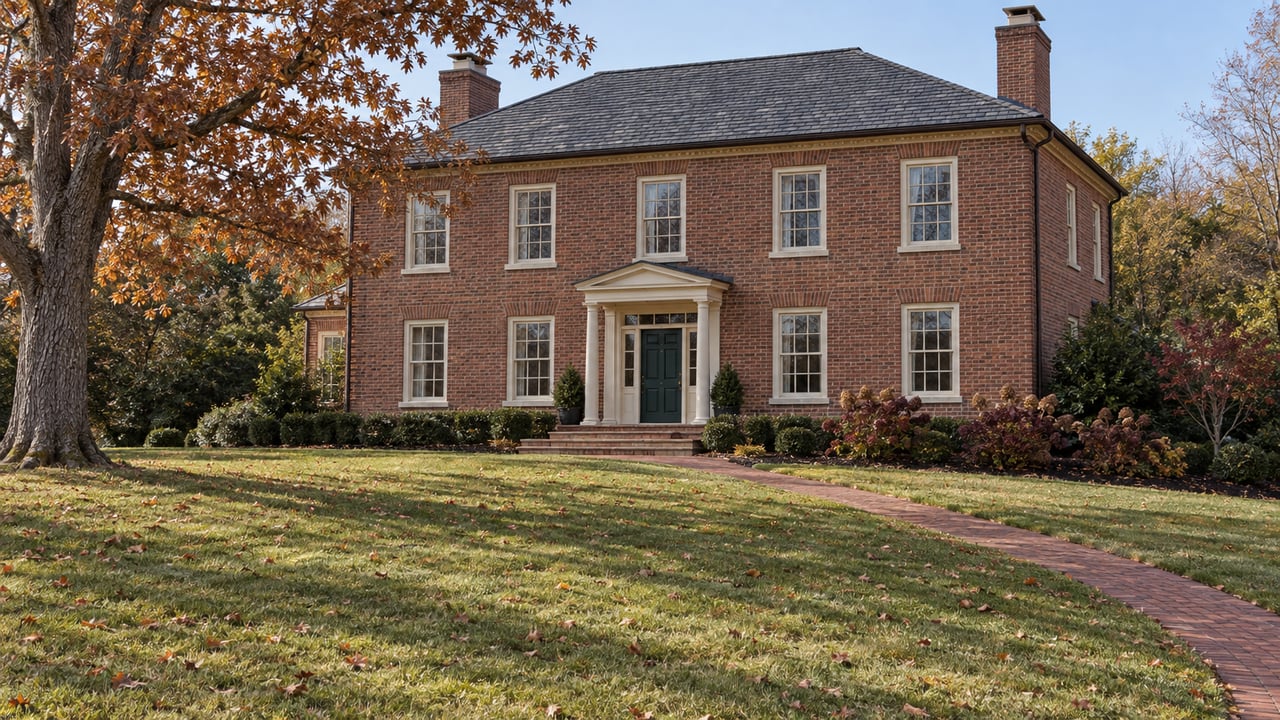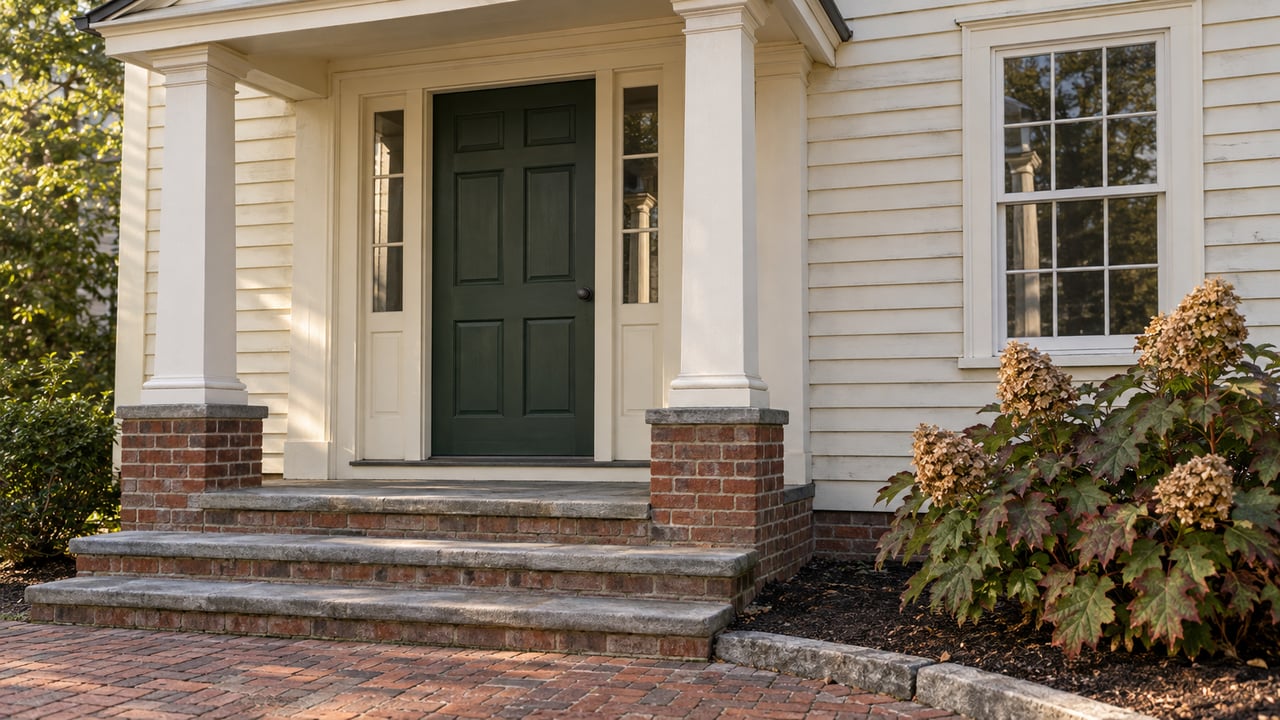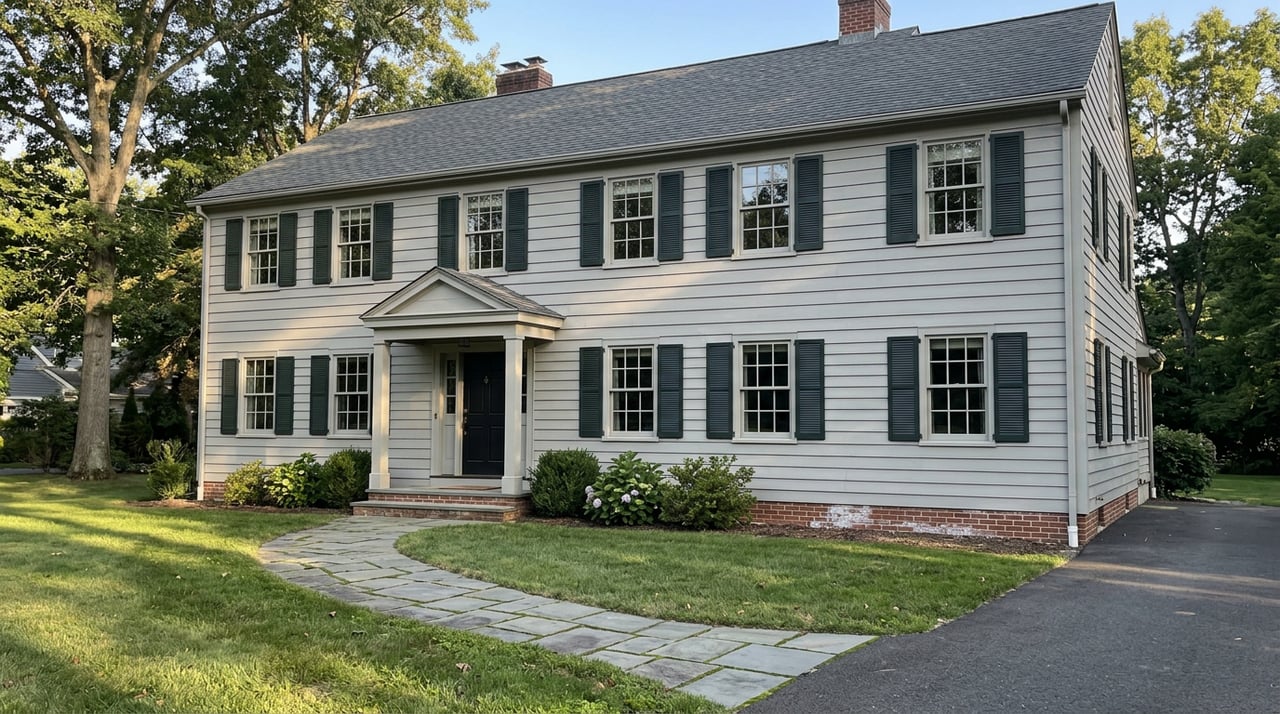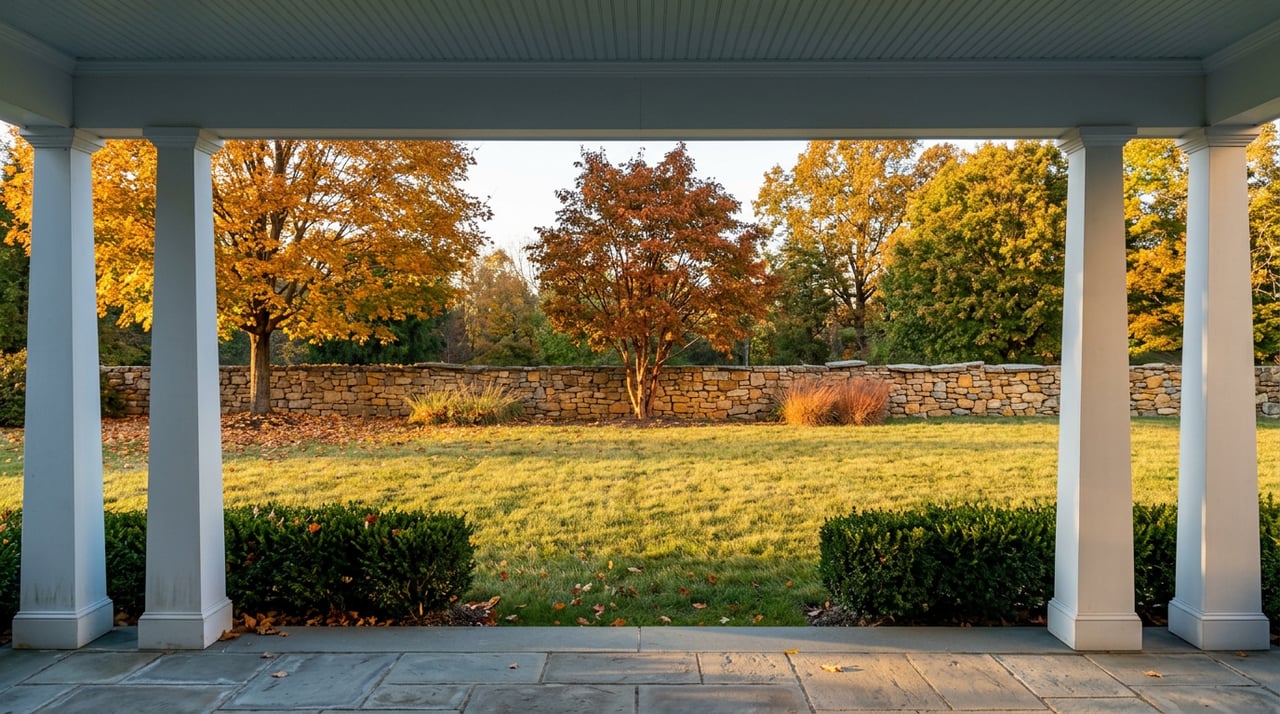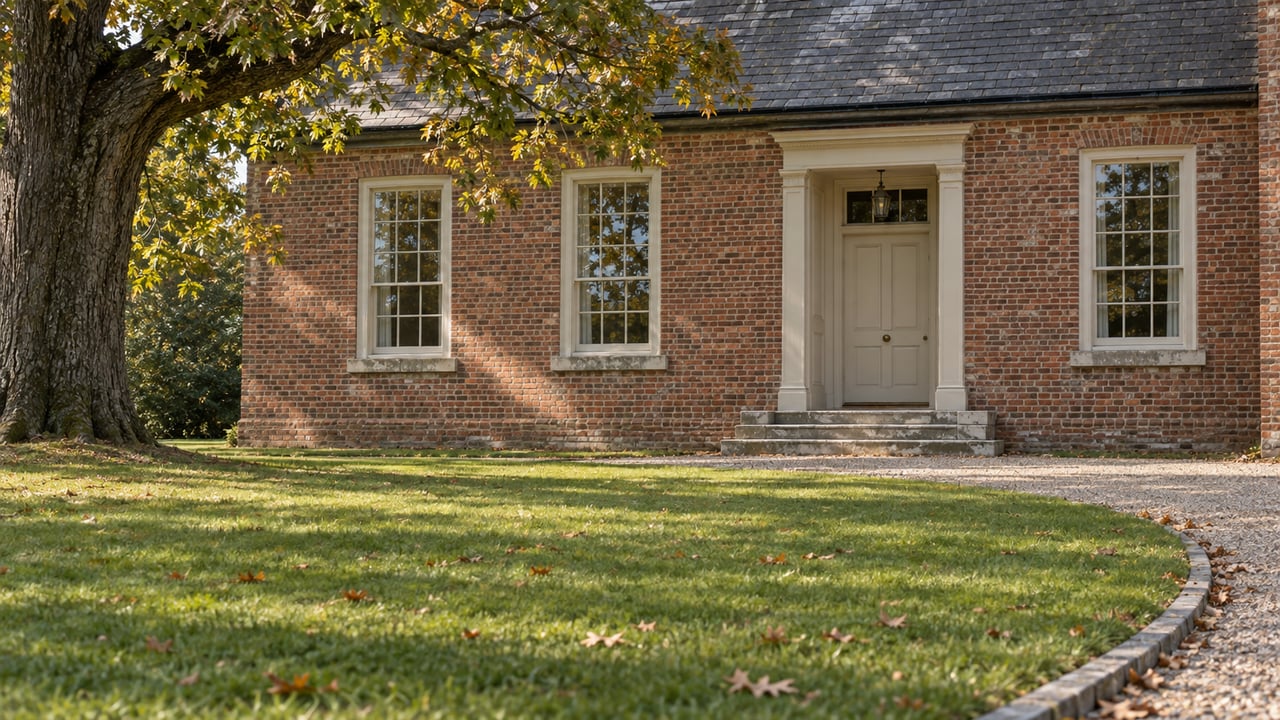
In June 2025, a buyer closed on 1248 Turner Mountain Rd for $4,550,000. The house sits at the literal end of the road, past a series of switchbacks off Route 250 West, on 14 acres of mostly wooded land in Ivy. There is no gate. No clubhouse. No shared pool the closing costs helped fund. The seller's monthly obligation to the neighborhood association was zero, because there is no association. What the buyer got instead was a 1961 brick, stucco, slate and copper residence that had just been through a full renovation and expansion, a detached guest cottage, and a dead-end driveway that meant no headlights would ever pass the front windows on their way to someone else's house.
That last detail is easy to skip past. It is also the whole story. Turner Mountain Wood, the fifteen-house enclave where this sale happened, has none of the shared infrastructure that usually shows up on a listing sheet as a reason to pay more. What it has instead is land, and the sale price says the land was enough.
Fifteen Houses and No Handbook
Turner Mountain Wood sits on a small, wooded mountain just west of Ivy, reached by taking Route 250 West past Duner's Restaurant and turning right onto Turner Mountain Road. The homes here were built between 1961 and 2014 by a mix of local builders and architects, including Peter Eades, Evergreen Builders, Jack Laramore, Peak Builders, Rosney Architects and Weather Hill Homes. There are fifteen of them.
There is no homeowners association. There is no design review board, no architectural committee, no monthly statement itemizing landscaping or pool chemicals. What residents do pay is a road maintenance fee of $500 a year, which covers upkeep on the two roads that serve the neighborhood and nothing else. That is the entire shared infrastructure budget for the community: two roads and a fee that would not cover three months of dues in some of Albemarle's amenity-driven subdivisions.
For comparison, a master-planned community like Redfields, on the opposite side of Charlottesville, currently charges homeowners $230 a month for single-family properties and $285 a month for townhomes, which works out to roughly $2,760 to $3,420 a year. That fee funds a pool complex, a pavilion, a playground, and maintained walking trails around a lake. It is a reasonable trade for buyers who want programmed amenities and a managed common area. Turner Mountain's buyers are making a different trade. They are paying almost nothing for shared infrastructure because there is barely any shared infrastructure to maintain.
What the Land Does Instead
The lots in Turner Mountain Wood range from 3.25 to 48 acres, with most under 11 acres, and the majority are described as wooded. There is no pool because there does not need to be one. Lots of 5, 8, or 11 acres, with trees between houses, create distance from the property next door. Shared amenities elsewhere can offer recreation and gathering space. When your fence line is a quarter mile of hardwood forest, the case for shared recreation infrastructure is different.
This is the piece that is easy to miss when a listing shows "no HOA" and a buyer's first instinct is to read that as a gap. In a community built at three to four units to the acre, shared maintenance can be a consideration. In a community where the average lot runs several acres and construction spans six decades, the same absence means something else. There was never enough density to require a shared system, so the market didn't build one, and buyers who want that kind of privacy have kept paying for it anyway.
The Farm at the Top of the Road
At the top of Turner Mountain Road sits Meriwether Ridge Farm, a 48-acre property with a six-stall barn, a riding ring and paddocks. It is not a neighborhood amenity in any formal sense. No one who buys on Turner Mountain Road gets access to the barn or the ring through their purchase. But its presence at the top of the same road that serves fifteen residential lots tells you something about what buyers here are actually shopping for. This is a road where a working horse farm and a handful of architect-designed homes coexist because the zoning and the lot sizes allow for both. That mix, land that can support a barn on one end and a renovated 1960s manor house on the other, is the product. A subdivision with a clubhouse could not accommodate a horse farm at its terminus. Turner Mountain can, because the entire model here is built around acreage rather than shared square footage.
The Gap That Closed in 2025
For years, the tradeoff on a property like this was straightforward: you got privacy and land, and you gave up modern connectivity. That tradeoff mattered more with each passing year that remote and hybrid work became normal for the kind of buyer who could afford 14 acres in Ivy. A dead-end road at the top of a mountain is a hard sell to someone who needs a reliable connection for video calls five days a week.
That gap closed for Turner Mountain in the spring of 2025. Firefly fiber internet was confirmed installed at 1248 Turner Mountain Rd ahead of its June closing, according to the listing record. For a property at the literal end of the road, on a lot with no near neighbors and no shared network infrastructure to speak of, that is not a minor footnote. It removed the one practical objection that privacy-focused acreage buyers in this price range have had for the past several years. The land was always the draw. The connectivity is what made the land usable for a buyer who still has to work from it most days.
Reading the June Sale Against the Trend
Sales data for Turner Mountain Wood is thin by design, since there are only fifteen houses and turnover is slow. Since January 2021, three homes sold with a median price of $1,370,000. In 2023, one sale closed at $952,000. Against that backdrop, the $4,550,000 closing in June 2025 is not simply an inflation-adjusted version of the same market. It reflects a specific combination that the neighborhood's earlier sales did not have: a 14-acre lot at the road's dead end, a comprehensive renovation and expansion of a 1961 house, a detached guest cottage, and confirmed fiber internet. The road fee for that buyer is still $500 a year. The HOA obligation is still zero. What changed was the condition of one specific 14 acres, not the pricing model for the neighborhood as a whole.
That distinction matters for anyone comparing Turner Mountain to a subdivision with programmed amenities. The ceiling on price here is not set by what the neighborhood provides collectively. It is set by what each individual lot and house can support on its own, which means renovation quality and acreage condition move the number far more than they would in a community where every unit shares the same pool and the same management fee.
A Few Questions Worth Answering Directly
Does Turner Mountain Wood have a homeowners association? No. There is no HOA and no design review process. The only shared cost is a road maintenance fee of $500 per year covering the neighborhood's two roads.
What amenities does the neighborhood offer? None in the conventional sense. There is no pool, clubhouse or tennis court. The amenities are the lots themselves, which range from 3.25 to 48 acres and are mostly wooded with views toward the Blue Ridge and Ragged Mountains.
Which schools serve Turner Mountain Wood? Albemarle County Public Schools assigns the neighborhood to Murray Elementary, Henley Middle and Western Albemarle High.
Land at this scale rarely comes up for sale, and when it does, the numbers tend to say more than the listing photos. If you are weighing a property like this against something with a managed amenity package, or you are on the other side and wondering what a renovation and a fiber install could mean for a lot you already own in Western Albemarle, Loring Woodriff Real Estate Associates has represented sales in exactly this part of Ivy and can walk through what the comparable acreage in your situation is actually worth.
This article is general information, not legal, tax or financial advice. Consult a qualified professional about your situation.