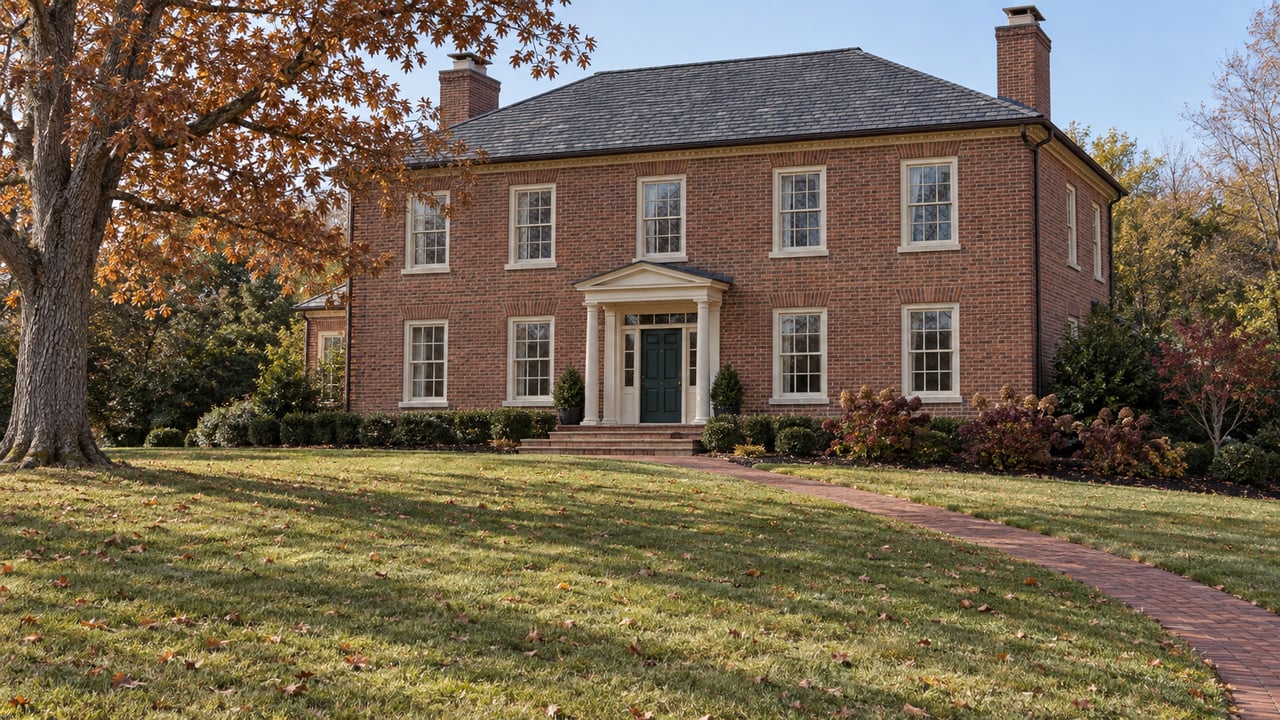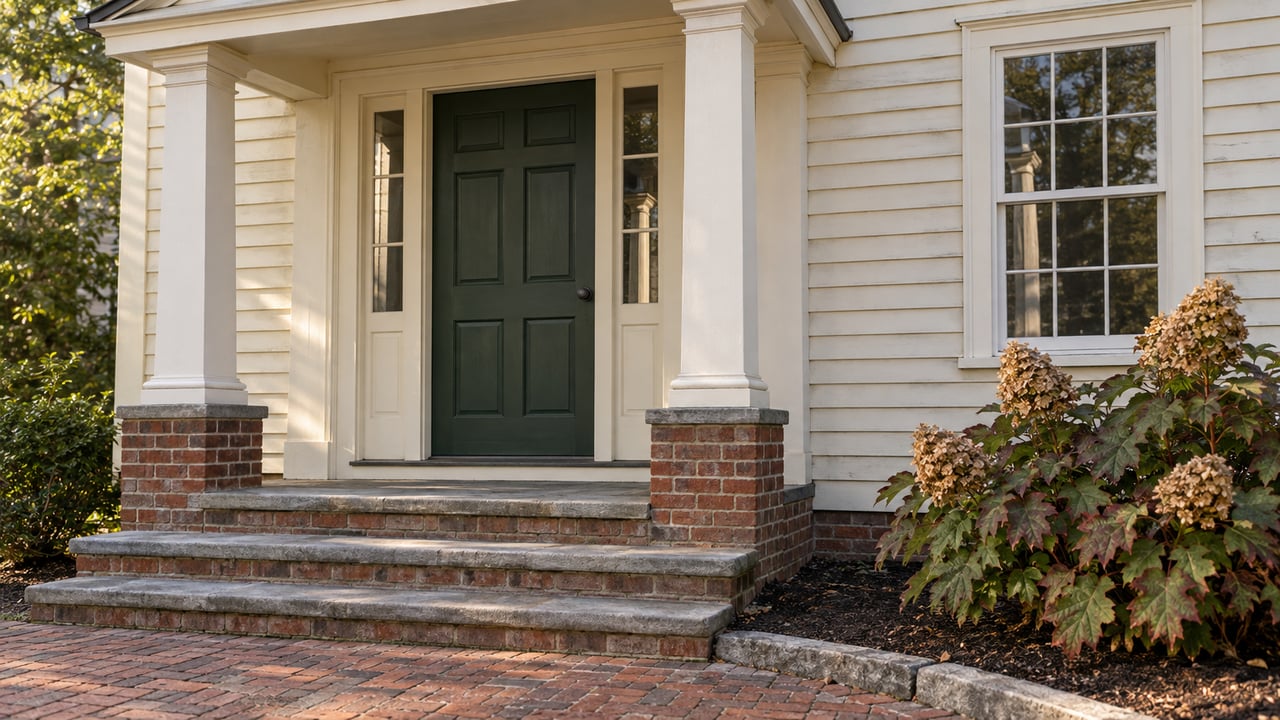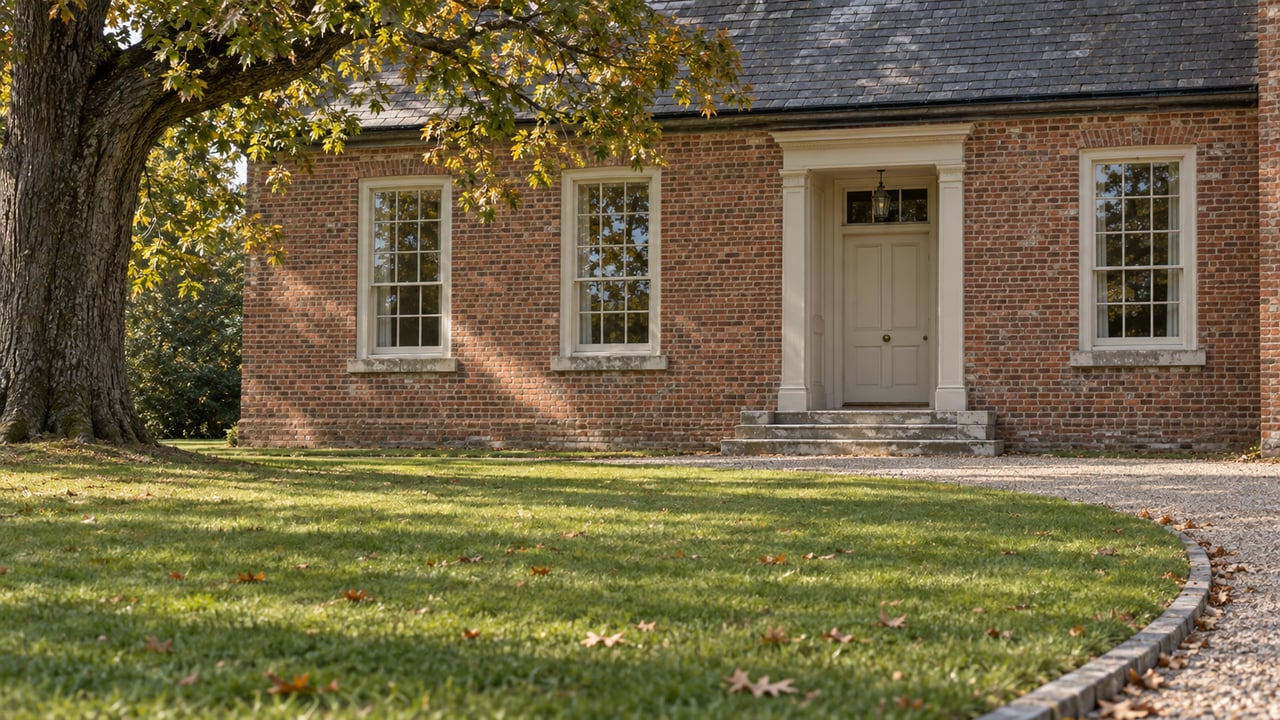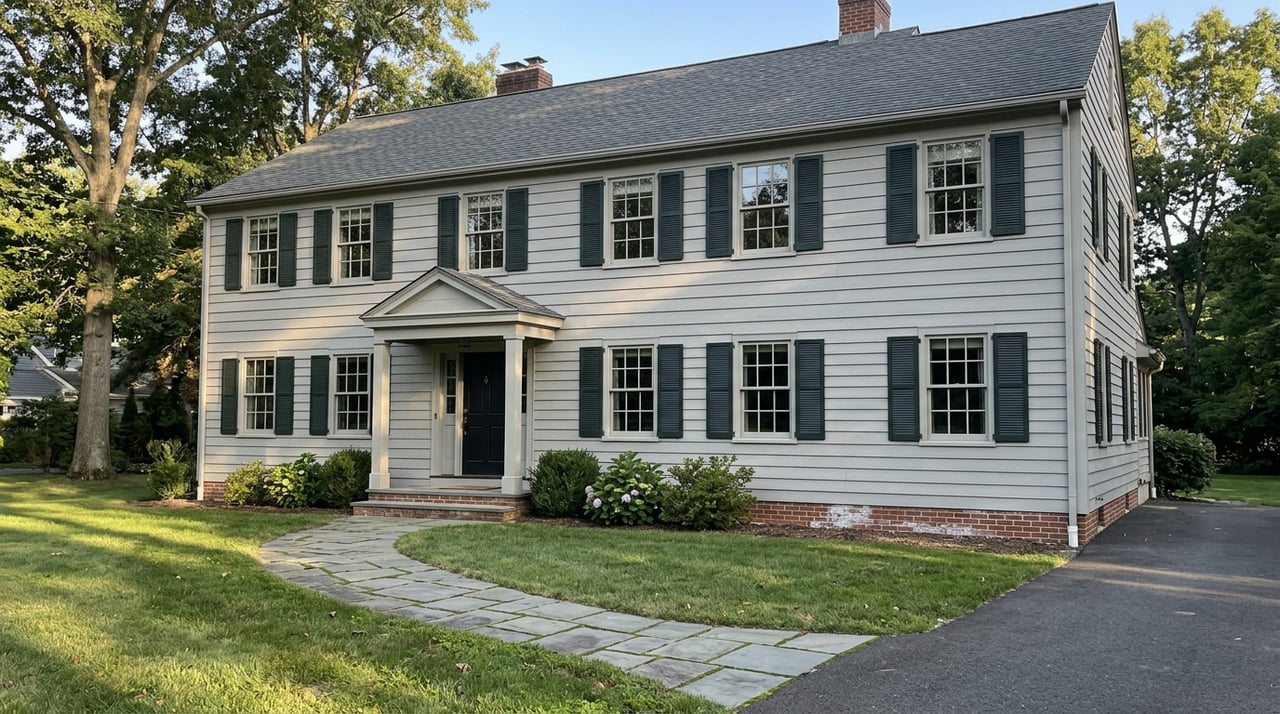
A buyer touring behind the Keswick gates for the first time tends to walk out with one number in their head: the asking price. It is the wrong number to anchor on. By the time the closing statement is drafted, three separate decisions have shaped what the address will actually cost to own and what it will be worth on resale, and only one of them is printed on the listing sheet.
This is the piece of the Keswick math that MLS photos cannot show. The list price opens the conversation. The Keswick Club membership overlay, the community's architectural review process, and the fixed geography of the 600-acre property finish it.
The list price is a partial answer to a longer question
Keswick Estate sits on the manicured grounds of Keswick Hall, roughly fifteen minutes east of downtown Charlottesville and about five miles from Sentara Martha Jefferson Hospital. The neighborhood was platted in the early 1990s, with homesites ranging from two to eight acres and a design vocabulary curated by a community review board from the start. That governance matters more than most buyers realize on the first walkthrough.
What sits inside the price and what sits outside of it is the question worth asking before the offer. A home a few doors down on Club Drive may look comparable in square footage and vintage, and still trade at a materially different price because one seller conveys a paid club initiation and the other does not, or because one lot has already cleared its DRB approvals for a pool house and the other has not. Reading the list price without reading these overlays is reading the first sentence of a paragraph.
Overlay one: the Club is a separate decision, not an amenity
Ownership at Keswick Estate carries the option, not the obligation, of joining the Keswick Club. Membership is capped at roughly 1,100, which limits the pool from which any owner draws access to Full Cry, the seven tennis courts, the adults-only Horizon Pool, and the fitness center. The Club sells access in tiers, most commonly a golf membership and a social membership, each with its own initiation and monthly dues schedule.
Two operational facts follow from that structure. First, an owner who wants full amenity access is signing a second, ongoing contract with the Club that is priced independently of the home purchase. Second, a resale that includes a previously paid initiation is not the same asset as a resale that does not, even if the two homes look identical. Whether initiation transfers with the property, is credited back, or must be paid fresh is a term of the transaction, negotiated between seller, buyer, and Club, and it should be reduced to a written understanding before ratification rather than after.
The membership figures a buyer will find in older articles online are dated. Current initiation and dues schedules are set by the Club and should be confirmed directly with membership staff; publicly circulated numbers from a decade ago are historical, not quotable, and using them to underwrite a purchase is a mistake we have watched buyers make.
Overlay two: the Design Review Board changes the renovation math
The community operates under a Design Review Board that approves new construction and material exterior changes. On paper this is a paragraph in the covenants. In practice it is a mechanism that quietly reprices two categories of inventory.
The first is the remaining undeveloped lots. Alexander Nicholson, Shelter Associates, and Rinehart Custom Homes are among the builders most familiar with the review protocol, which shortens the schedule and reduces the number of revision cycles between concept and shovel. A buyer bringing an out-of-market architect who has never worked inside these guidelines is not buying the same lot as a buyer bringing a Charlottesville firm with a folder of prior Keswick approvals. The land basis may be identical. The build risk is not.
The second is resales with anticipated additions. A pool, a detached garage, a guest wing, a fence line change, an exterior color, a driveway realignment: each of these lives inside the DRB envelope. Some homes come to market with approvals already granted or with modifications recently completed under the current guidelines. Others come to market with a wish list that has never been tested. Underwriting the second as if it were the first is how buyers absorb a delay they did not price.
The list-versus-sale gap on resale homes inside the gate is quieter than in nearby subdivisions, but the gap on lots is wider, and the reason is almost always something the DRB record can explain.
Overlay three: 600 acres, a fixed lot count, and what "no expansion" means
Keswick Hall's grounds cover roughly 600 acres. Inside that footprint, the residential community was platted to a fixed number of homesites, in the range of 121 to 126 depending on how one counts a few merged parcels, and there is no mechanism to add more. The land has been drawn. The neighboring corridors of legacy horse farms and historic estates along Hunt Club Road and Route 22 are governed by their own separate ownerships and conservation histories, not by the community's plat.
This is the least intuitive of the three overlays. In most Albemarle submarkets, a softening county median implies real negotiating leverage for the buyer, because inventory can rebuild through new construction and infill. Inside a fixed-supply gated community with a design regime and an amenity overlay, the same countywide softening does not translate one-to-one. The number of homes that can ever exist here is a settled figure. The number of members the Club will ever seat is a settled figure. The buyer's leverage is real but narrower, and it lives inside the community's own turnover cycle rather than inside the county trend line.
Reading this against the 2026 Albemarle backdrop
Regional reporting in Spring 2026 has flagged an Albemarle listing count up roughly 34 percent year over year in one November snapshot and overall inventory near 2.1 months of supply, with a broader Charlottesville price per square foot in the mid-$190s across the general market. Those are county figures. They describe a market where the balance is drifting toward buyers in aggregate.
Applying that drift to Keswick Estate without translation is a category error. The neighborhood's inventory is drawn from a pool of fewer than 130 homes and a small number of remaining lots. In a given quarter, the number of comparables inside the gate is often in the low single digits. A county-wide inventory swing shows up here as one or two additional listings, not as the doubled selection a Zillow-shaped mental model would suggest. The right comparison set is Keswick to Keswick over rolling twelve to twenty-four month windows, with an adjustment for whether the specific transactions included a transferred membership and a current DRB posture.
The reimagined Keswick Hall itself, brought back to life by owners Molly and Robert Hardie, has changed the amenity picture in a way that also affects resale narrative. Marigold by Jean-Georges, open Wednesday through Sunday from 5:00 p.m., Crawford's for cocktails, The Counter for a grab-and-go lunch, and the spa are all part of the daily rhythm an owner can walk to. That is a real change from the property's earlier decade and it belongs in the pricing conversation, not because amenities inflate value on a linear schedule, but because they change who the buyer pool actually is.
A punch list for the pre-offer conversation
Before signing, we walk buyers through the following:
- Confirm current Club initiation and dues tiers directly with membership staff, in writing, dated within the week of the offer.
- Ask the seller in writing whether a paid initiation conveys, is credited, or terminates at closing, and get the Club to confirm the mechanic.
- Request the DRB file for the property: prior approvals, open approvals, denied requests, and any pending conditions from the last renovation.
- For lots, ask which builders have recent approvals inside the community and price the build with one of them, not with an out-of-market firm.
- Reconcile the comps set to Keswick-only sales over the trailing twenty-four months, with the membership status of each comp noted where known.
- Model resale under two scenarios: with the membership overlay carried forward and without.
A short FAQ
Is Keswick Club membership required for owners? No. Ownership at Keswick Estate carries the option to join the Keswick Club, not an automatic seat. Members choose among tiers, most visibly golf and social, and the total membership count is limited.
Can I renovate freely once I own? Material exterior changes fall under the community's Design Review Board process. Interior work is generally the owner's discretion, but pools, outbuildings, fencing, exterior color, and site changes typically require approval, and the schedule matters at contract stage.
Why do sale prices inside the gate not always track the Charlottesville median? The community is a fixed-supply, amenity-overlaid submarket of roughly 121 to 126 homesites on 600 acres. County-level inventory swings do not translate proportionally, because the local inventory pool is small and the amenity structure is unique to this address.
If you are weighing a purchase at Keswick Estate, or considering the sale of a home behind the gate, we would welcome the conversation. Loring Woodriff Real Estate Associates has represented buyers and sellers in this community and across the surrounding Keswick corridor for years, and we are happy to walk through the club, the review process, and the current comp set in the specific context of your address. Let's work together.