When Southwood residents sat down years ago to name the first shared park in their rebuilt neighborhood, they wanted to put University of Virginia basketball coach Tony Bennett's name on it. Bennett said no. He told them a coach's name doesn't belong on a park, not really, not if the team ever has a bad season. Instead he offered them something that would outlast a win-loss record: the five values his program is built on, humility, passion, unity, servanthood, and thankfulness. Residents took the offer. Five Pillars Park was born from a rejection, not a tribute, and that detail says more about how Southwood works than any press release about square footage or unit counts.
That anecdote matters this fall for a simple reason. If you already live in Southwood, the headlines about redevelopment can start to feel like they're about someone else's neighborhood, a groundbreaking here, a grant announcement there. But the changes worth knowing about this season aren't the ribbon-cuttings. They're happening in three places at once, at three different speeds, and one of them is underground where nobody takes photos.
The Park Is More Than a Name
Five Pillars Park sits at the center of the first redeveloped section of Southwood, and it's not just a green space with a plaque. Habitat worked with the U.S. Soccer Foundation, which found a sponsor to build a mini soccer field there, giving the neighborhood's kids a place to play that didn't exist when Southwood was still rows of aging mobile homes. Community fundraising, including support from the Carson Raymond Foundation, helped cover the rest of the build-out. The road names around it tell the same story residents wanted the park to tell: Horizons Road runs through the center of the new section, chosen because residents liked the idea of the redevelopment as a fresh start rather than a memorial to anyone in particular.
If you walk past the park most afternoons, you're walking through a decision residents made on purpose, not a default amenity a developer dropped in because a checklist required a park.
The Villages Are Filling In, Wall by Wall
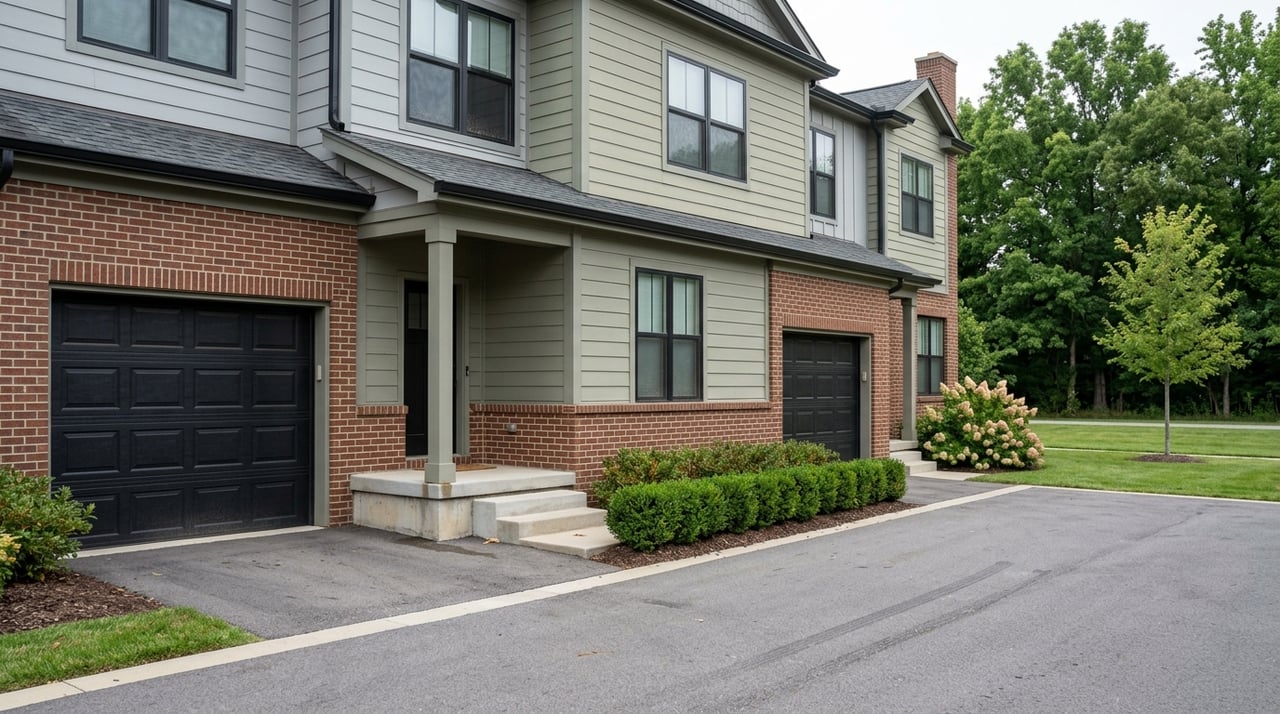
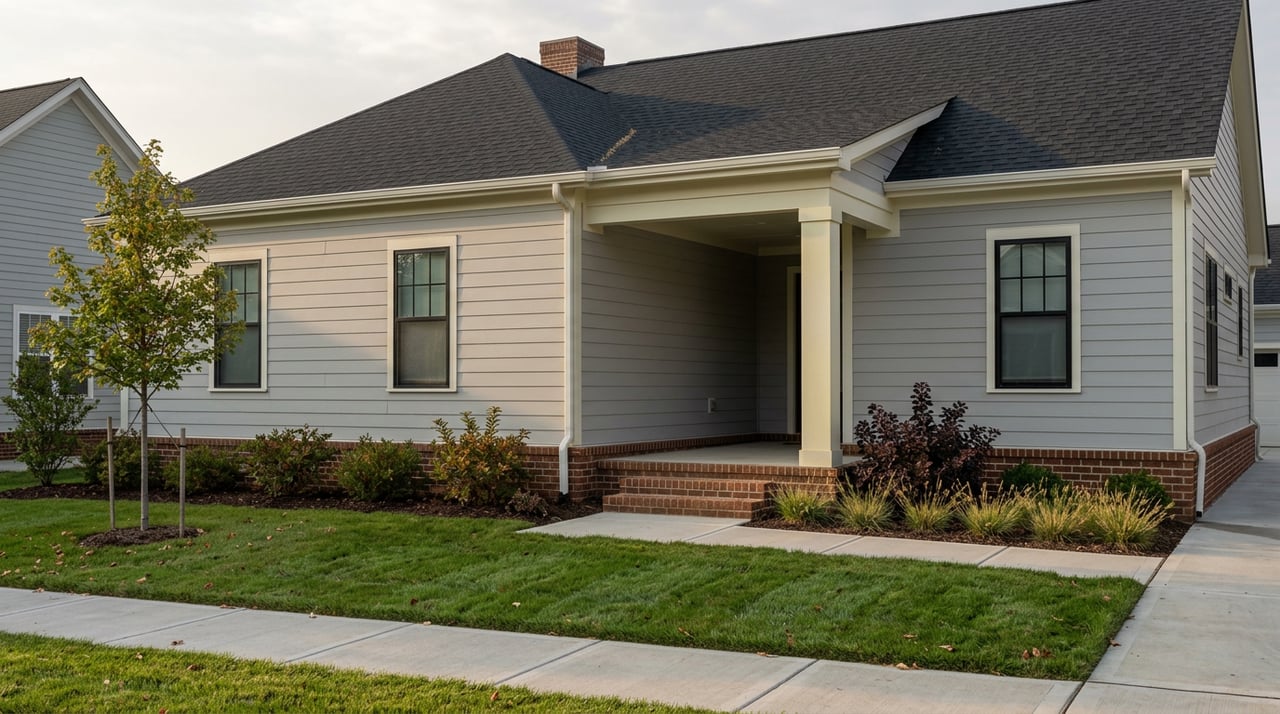
The construction you can actually see right now is concentrated in Village 3, the first neighborhood of Southwood's Phase 2. According to Habitat for Humanity of Greater Charlottesville's own 2025-26 impact report, the first 13 home foundations in Village 3 went in during early 2026, following the completion of Village 2. When finished, Village 3 will add 52 affordable homes to the neighborhood.
Two volunteer pushes moved that work forward this year. From late March through mid-April, more than 250 volunteers took part in Habitat's annual Women Build, raising the walls on five of those Village 3 homes. Natalie Burgwin, Habitat's Director of Resource Development, described the goal plainly on the first day: three homes standing by evening. In July, a different group showed up, this time members of the Blue Ridge Home Builders Association, who spent a day framing walls and installing siding alongside two future Southwood homeowners.
Frank Ballif, president of Southern Development Homes, put the stakes in blunt terms that day: the region doesn't have enough homes, and Southwood is part of closing that gap. Luke Roark, the Home Builders Association's 2026 president, made a point about the two future residents on site with hammers in hand.
"They'll have ownership and the full equity of the property and be able to generate that wealth to share with their future generations."
That's not a detail you'd find in a construction update. It's the difference between a subdivision going up around people and a neighborhood being built by the people who will live in it.
The Part Nobody Photographs
Here's the piece of news that matters more than either of the above, and it's the one least likely to make it into a groundbreaking photo. On the other side of Southwood, in the section that hasn't been redeveloped yet, 63 households are still living on a septic system that Habitat's own CEO Dan Rosensweig has described as failing. Albemarle County was awarded a $2 million Community Development Block Grant in February 2026 to help cover the Southwood Sanitary Sewer Project, a $3.735 million effort to replace those failing systems with a permanent public sewer connection. As of mid-August 2026, the project was still working through public notice requirements tied to the federal funding, according to local reporting from Charlottesville Community Engagement.
Stacy Pethia, Albemarle's director of housing, framed the stakes around health and safety rather than aesthetics, tying the grant directly to preventing overflowing septic tanks in homes that are still years from being rebuilt. This is the unglamorous twin of the Village 3 story: while new foundations go in on one side of Southwood, the county and Habitat are racing to fix a decades-old sewer problem on the other, for residents who won't see a new house for years but need working plumbing now.
Here's roughly where things stand, side by side:
| Area of Southwood | What's happening | Timeline |
|---|---|---|
| Village 3 (new construction) | 13 foundations poured, walls raised on 5 homes via Women Build | Early 2026 through end of year |
| Original mobile home park (pre-redevelopment) | Sanitary sewer project replacing failing septic for 63 households | Grant awarded Feb. 2026; public notice process ongoing as of Aug. 2026 |
| Five Pillars Park | Mini soccer field complete, community green space active | Built out in earlier phase, in use now |
The lesson in that table isn't that Southwood is behind schedule. It's that a redevelopment this size runs on two clocks that rarely get mentioned in the same sentence: the clock for new construction, which photographs well, and the clock for keeping existing residents safe while they wait their turn, which mostly shows up in grant paperwork and public notices.
Ninety Businesses, One Backyard Cantina
The other thing easy to miss if you're only tracking construction milestones is how much of Southwood already runs on its own residents' labor. More than 90 resident-owned businesses operate out of the neighborhood, everything from tortilla makers to landscaping companies, built up long before any of the new villages broke ground. Habitat's housing designs for later phases have tried to make room for that reality rather than erase it, including flexible layouts with accessory spaces built for exactly this kind of small enterprise. One resident, who runs a cantina, is set to move into a new home designed so she can keep operating her restaurant out of her own backyard.
That detail is worth sitting with. A lot of redevelopment projects treat existing informal commerce as something to phase out. Southwood's design process treated it as something to build around. It's part of why, according to reporting on the project, roughly 85 percent of Southwood families have chosen to stay through the redevelopment process, compared with a retention rate closer to 13 percent in comparable mobile home park redevelopments nationally. People don't stay in a neighborhood mid-construction unless the plan was actually built with them in the room.
What This Adds Up To
None of this is really about buying or selling. It's about understanding that the version of Southwood you're living in right now is temporary in a specific, dated way: some of it is finished, some of it is framed but not sided, and some of it, the part underground, is still waiting on a public notice process to clear before crews can even start. Biscuit Run Park borders the neighborhood to the south and west, which means the trail access most residents already use predates any of this construction and isn't going anywhere regardless of which village finishes next.
If you're watching the cranes and the framing crews, keep an eye on the paperwork too. The sewer project moving through Albemarle County's process this fall will do more for more of your neighbors, sooner, than any single new home dedication.
If you're weighing a move within Southwood, thinking about a rental you manage nearby, or just want a clearer read on how a neighborhood like this actually behaves once construction phases start overlapping, that's the kind of on-the-ground context Loring Woodriff Real Estate spends its time tracking across Charlottesville and Albemarle County. Let's work together.